
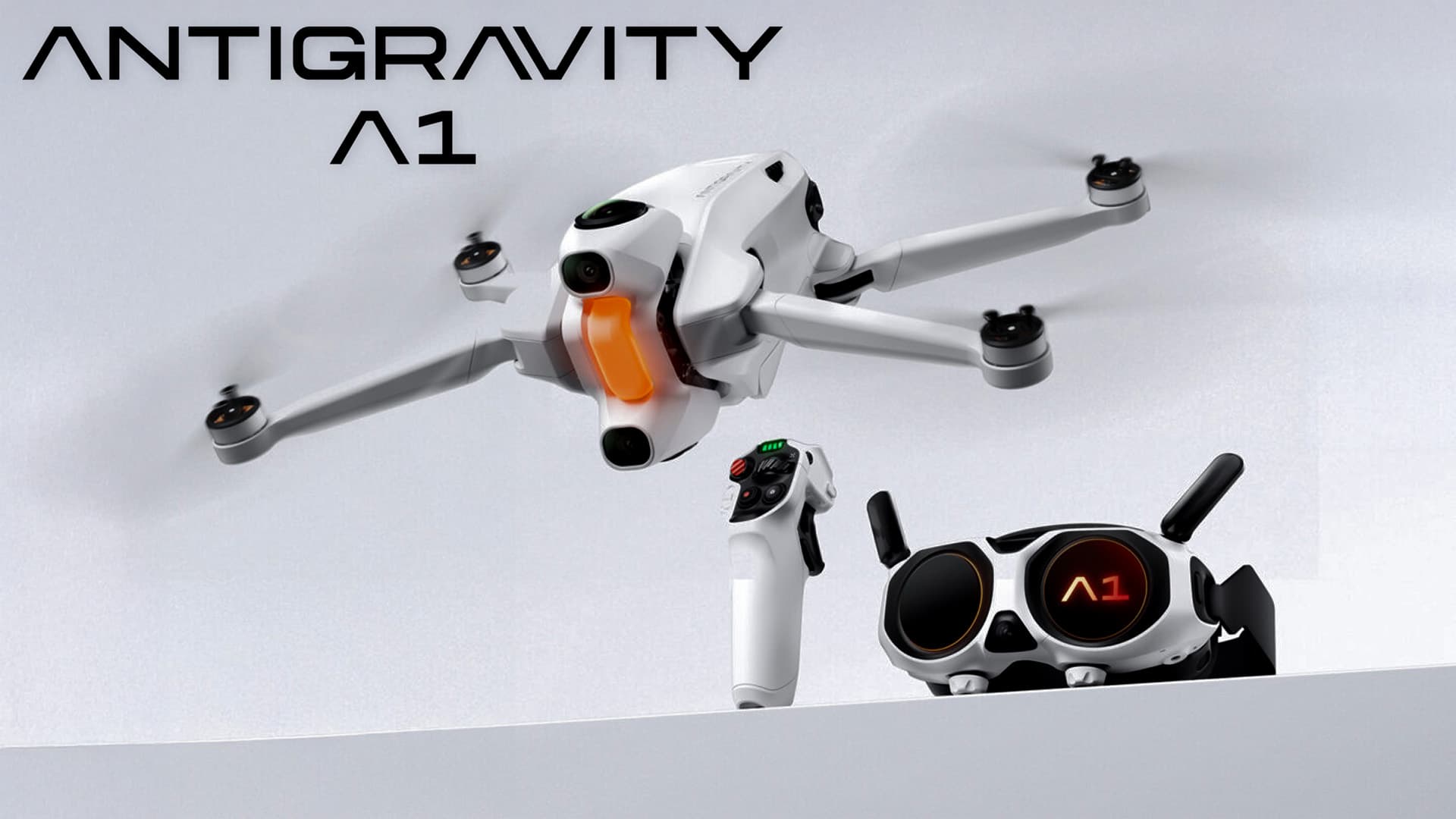
The Antigravity A1: Insta360’s Next-Gen Aerial 360° Platform
The Antigravity A1—Insta360’s upcoming aerial platform slated for January 2026—reads like a manifesto for creators who crave unbounded perspective. With native 8K capture across dual 360° lenses and pilot-immersive goggles, it promises a toolchain where one flight can yield dozens of shots, angles, and story beats. Imagine launching a single drone, then “directing” the scene afterward: reframing, keyframing, and composing as if time itself were elastic. That is the thesis. It’s not only about resolution; it’s about capturing an entire volumetric moment so thoroughly that creative intent can be expressed long after the props stop spinning. The sky becomes an edit bay; the horizon, a timeline.
A Sensor-Dense Airframe: Optics, Stabilization, and Human-in-the-Loop Control
Optical Architecture: Back-to-Back Fisheyes and the Gentle Art of Stitching
At the heart of aerial 360° is a paradox: the camera must see everything while the aircraft itself remains invisible. The Antigravity A1’s dual, back-to-back fisheyes tackle this through overlapping fields of view, high peripheral sharpness, and computational stitching that reconciles parallax between hemispheres. Think of it like sewing two hemispheric quilts into a single globe without a seam. In flight, rapid changes in scene depth—tree lines, rooftops, mastheads—stress the stitch, so the math dancing under the hood matters. Precise lens alignment, per-unit calibration, and per-frame optical flow reduce “ghosting,” while consistent nadir treatment keeps the drone’s footprint discreet.
8K capture compounds both opportunity and challenge. More pixels enlarge latitude for reframing, but they also expose subtle stitching artifacts that might hide at 5.7K. The A1’s pipeline likely pairs lens shading maps with gyro-aware warps, adjusting seam placement as content evolves. Picture a schooner sailing below; as the drone arcs, rigging and spars sweep across the stitch equator. Dynamic seam steering can route transitions through low-frequency texture, like open water or sky, minimizing discontinuities. Add high-bitrate encoding and robust deghosting, and you get source material that sustains aggressive post moves without fraying the illusion of a single, continuous sphere.
Stabilization Pipeline: Flow-State Meets Aerodynamic Tuning
Traditional aerial rigs lean on 3-axis gimbals to tame turbulence. A 360° system flips the paradigm: rather than mechanically isolating a single viewpoint, it records the whole scene and stabilizes virtually. The A1’s stabilization is likely driven by a tightly fused IMU stack—gyros, accelerometers, and possibly magnetometer data—paired with horizon detection and motion modeling. Instead of “hold this angle,” the logic asks, “what virtual camera path feels cinematic?” That allows horizon lock that doesn’t care if the airframe rolls through gusts, and it enables buttery pan-tilt-roll curves that would be difficult to achieve mechanically, especially on aggressive maneuvers.
Yet algorithms are only half the story. Aerodynamic tuning—arm geometry, prop wash mitigation, and vibration damping—feeds cleaner motion into the math. Micro-vibrations at the frame level can surface as fine jitter in high-frequency details at 8K, so the airframe must be quiet in the mechanical sense. Consider how a musician prefers a silent room: the better the acoustics, the less post-processing you need. Similarly, when the drone’s structural harmonics are controlled, software stabilization can focus on macro motion rather than battling resonance. The outcome is a latent steadiness that lets you keyframe bold reframes without tearing the fabric of the scene.
Pilot Immersion: Low-Latency Goggles and Situational Awareness
An aerial 360° rig only pays off if the pilot can place it precisely, which is where goggles and low-latency transport matter. The A1’s immersive goggles create a cockpit-like mental model: rather than peering through a cropped FPV window, you inhabit a panoramic dome. Latency governs trust; if head motion translates to visual update with minimal delay, fine-grained movements—slotting through a wind gap, hugging a ridgeline—feel natural. A wide field of view curbs tunnel vision, and a clean on-screen overlay—battery, GPS health, link quality—keeps cognition uncluttered so the pilot can fly the shot rather than the instruments.
Imagine guiding the A1 along a sea cliff at golden hour. With head-tracked view inside the goggles, you can “look” down to judge clearance, then glance horizon-ward to previsualize a reveal. Meanwhile, the aircraft’s position remains decoupled from where you’re looking, because the recording is global. That separation between capture and gaze becomes creative superpower: you place the drone for optimal safety and pathing, and later you steer the story with virtual cameras. It’s like conducting an orchestra in real time while saving every individual instrument track for a director’s cut in post—spontaneity now, authorship later.
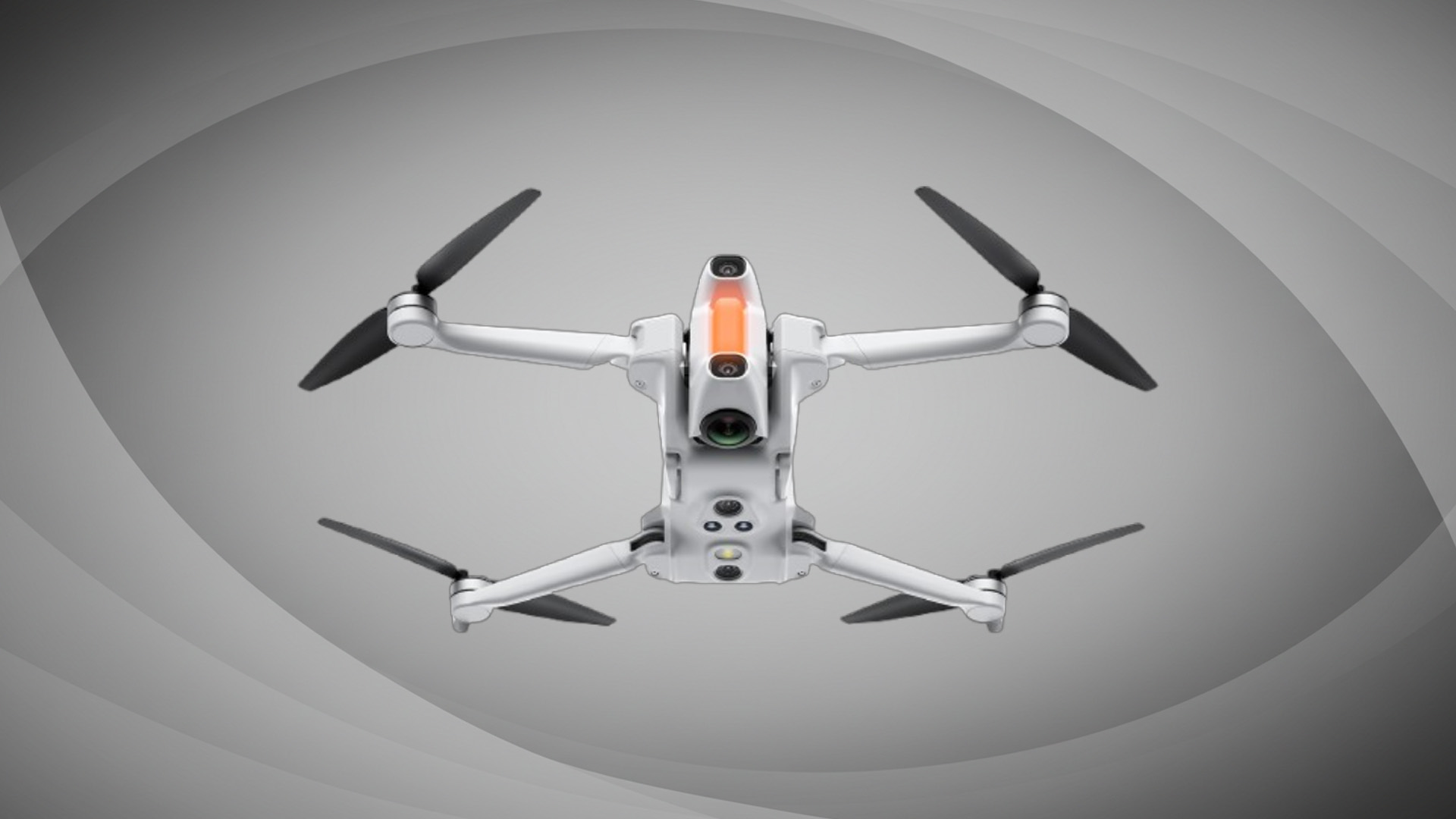
A Glimpse Into A Sky Built For Storytellers
Aerial Grammar Rewritten: New Shot Patterns from a Single Flight
Orbits Without Orbits: Virtual Dollies and Impossible Pans
In conventional drone work, you commit to the move: orbit left, dolly out, crane up. With 360°, you bank the move and decide the camera later. One pass can yield a lock-off establishing frame, a parallax-rich tracking shot, and a whip-pan to a secondary subject—simply by keyframing a virtual viewpoint. Think of it as having a fleet of micro-cameras suspended in the same airspace, each obeying your editorial whim. The Antigravity A1’s 8K texture depth ensures that even aggressive crops retain clarity, letting you deliver 4K reframes with room to spare while preserving motion cadence that aligns across every derived angle.
A practical example: fly a gentle arc above a music festival. In post, set Camera A to follow the main stage, Camera B to peel off toward the fireworks, and Camera C to swing down into the crowd for a moment of intimacy. Because each virtual camera pulls from the same sphere, cut points marry naturally—no jumps in weather, light, or talent blocking. You remake coverage like a multi-cam director after the fact, finessing pace without reshoots or risky aerobatics. The creative calculus changes: instead of chasing shots, you design moments, confident you’ve already captured the reality they live inside.
Nadir Magic: The Invisible Drone and the Clean Down-Shot
Every 360° aerialist eventually battles the nadir—the zone beneath the aircraft where the stitch converges and the airframe lurks. The A1’s design and algorithms aim to make that footprint as graceful as a well-placed rug: present when required, vanish when it matters. Clever seam placement and content-aware fill techniques can minimize the telltale scab of props or landing gear. When the platform’s geometry cooperates—slim center column, no protrusions near lens equators—down-shots over architecture or surf gain a pristine continuity, the kind that makes audiences wonder, “Where is the drone?” The answer: hidden in the math and the silhouette.
Consider a real-estate flyover. A pure top-down view often reveals a rig’s shadow and hardware. With the A1’s optimized nadir handling, you can glide directly above a courtyard, then flow into a forward-tilted perspective mid-sequence without an awkward seam flicker. A sparse, uniform surface like sand or asphalt challenges texture synthesis, so high-quality source detail and consistent motion become lifelines. Combined with robust de-spin and horizon hold, the nadir’s visual behavior blends into the scene’s natural rhythm. The outcome is a signature “invisible crane” look—elevated, omniscient, and narratively neutral—giving your story space to breathe without calling attention to the rig.
Spatial Editing: Keyframes, Proxy Timelines, and Motion Alchemy
Working at 8K 360° means living with weighty files. Efficient practice starts with proxies: low-res, high-responsiveness stand-ins you can scrub like a DJ while the originals nap on fast storage. You sketch camera intent using orientation curves—pan here, tilt there, roll for emphasis—and finesse timing with ease-in/out ramps that mimic physical dollies. This is spatial editing: sculpting attention, not just trimming edges. Tools that respect the sphere’s geometry—equirectangular-aware transitions, equi-angular cubemap intermediates—avoid warping faces and straight lines. When your virtual lens “whips,” motion blur synthesis can be tuned to feel optical rather than computational, anchoring the illusion of a glass-and-metal camera.
Picture a mountain-bike chase. You record a single overhead path. In post, you bind a virtual camera to a rider’s helmet using planar trackers and IMU hints from flight logs, then animate anticipatory pans to catch jumps a beat early. The edit becomes choreography: instead of merely cutting, you are conducting spatial intent. Color timing can separate foreground action from the canopy by pushing blues into teal and mids toward warm greens, guiding the eye through the synthetic lens. With the A1’s high-resolution material, these interventions hold up on large displays, granting you theatrical punch without sacrificing authenticity or introducing shimmer.
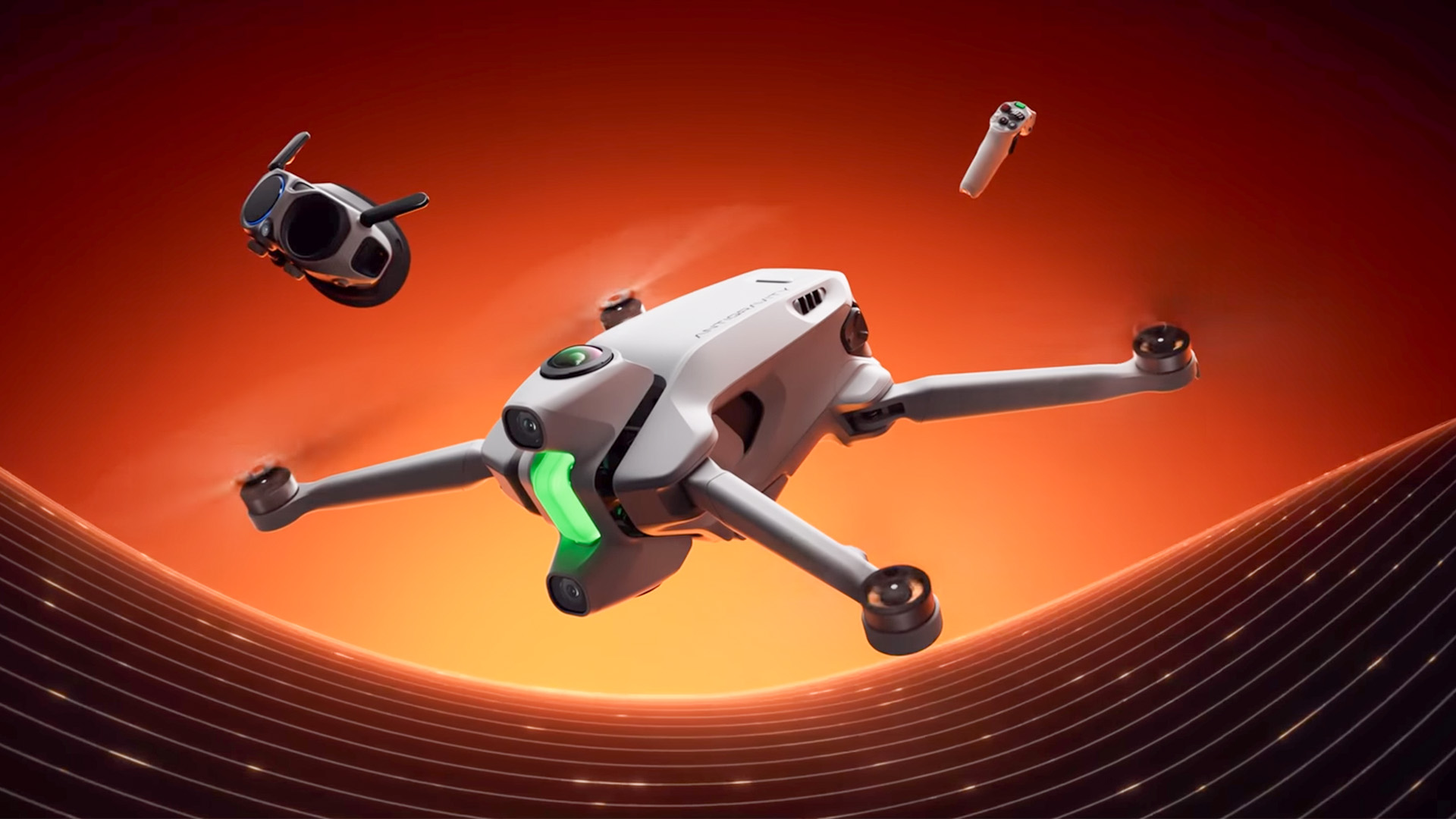
Aerial Grammar Rewritten
Fieldcraft to Final Master: A Pragmatic End-to-End Workflow
Planning the Envelope: Site Surveys, Geofencing, and Shot Design
Great aerial 360° is part engineering, part cartography. Pre-flight, you sketch a “story envelope”: where the subject moves, how wind funnels through terrain, and which headings keep the sun in a flattering quadrant. Geofencing and altitude constraints are not just compliance levers—they’re creative rails. Define waypoints that place the airframe in safe, repeatable lanes, then annotate intended virtual camera orientations so you know where reframing latitude is richest. A simple grid walk with a smartphone can reveal multipath interference risks near metal roofs or power lines. The more you anticipate, the more your single pass yields in the edit suite.
Hypothetical scenario: you’re documenting a coastal regatta. You choose a racetrack-shaped flight plan that keeps the A1 on the leeward side of the fleet, avoiding spray and preserving line-of-sight. You map start times to tide tables and golden hour to flag the most evocative passes. For 360°, you also plan negative space: sky and sea serve as stitching sanctuaries where seams can hide. You’ll later use those sectors as buffers during whip-pans and transitions. Meanwhile, you mark RF shadow zones behind cliffs and cue a spotter to monitor traffic. Creativity flourishes when logistics are choreographed rather than improvised mid-air.
On-Set Rhythm: Battery Ecology, Thermal Discipline, and Link Integrity
8K 360° capture is thermally demanding. The flight case for an A1 day should look like a pit crew cart: staged battery sets, a folding shade for the ground station, silica-gel pouches for lenses, and a small, quiet fan to pull heat off the airframe between sorties. Rotate packs to avoid hot-swapping cells that haven’t equalized. Before each launch, wipe glass with non-abrasive swabs; a single salt crystal can etch coatings during a high-speed gust. Link integrity matters more than usual because reframing assumes you’ll have material. A drop-out at the moment of magic hurts more when the plan counted on infinite angles later.
Streamline takes. Rather than multiple short flights, consider longer, thematic passes that cover an entire beat—setup, escalation, payoff. Editors love continuous material; it’s the raw clay for spatial storytelling. Run a quick thermal check after hotter maneuvers—full-stick climbs, high-wind cross-tracks—since sustained current draw raises core temperatures that can throttle sensors. Keep the goggles UI uncluttered and train hand signals with your spotter to minimize vocal chatter near talent. When the A1 touches down, copy media immediately to two destinations. Label cards by flight number and subject because you will forget later, and 8K directories look identical in a rush.
Post: 8K 360° Ingest, Color Science, and Multi-Format Delivery
Back at base, treat ingest like a relay race. Verify checksums on copy, generate proxies, and sync flight logs if you plan to leverage gyro-based stabilization or scene-linked telemetry. For color, a managed workflow pays dividends: transform camera space into a consistent working gamut (ACES is a strong candidate), then grade in a tone-mapping environment that respects highlight roll-off. Because 360° spans lighting extremes, you’ll often build localized secondaries—sky compression masks, water sheen control, skin tone anchors. The goal is coherence: every virtual camera derived from the master sphere should feel like the same lens, on the same day, under the same intentional hand.
Delivery bifurcates: immersive and framed. For platforms that support 360° playback, maintain full equirectangular masters at high bitrates, ensuring metadata flags are correct so players recognize the format. For reframed versions, export in conventional aspect ratios—16:9, 9:16, 1:1—at up to 4K, pulling from the 8K source to preserve micro-detail. If slow motion is part of the aesthetic, prioritize frame-accurate optical flow tuned for spherical footage; nothing breaks the illusion faster than warping along a stitch. Archive the original sphere and grade LUTs. As the ecosystem evolves, you’ll want the option to remaster with better debayering and noise models.
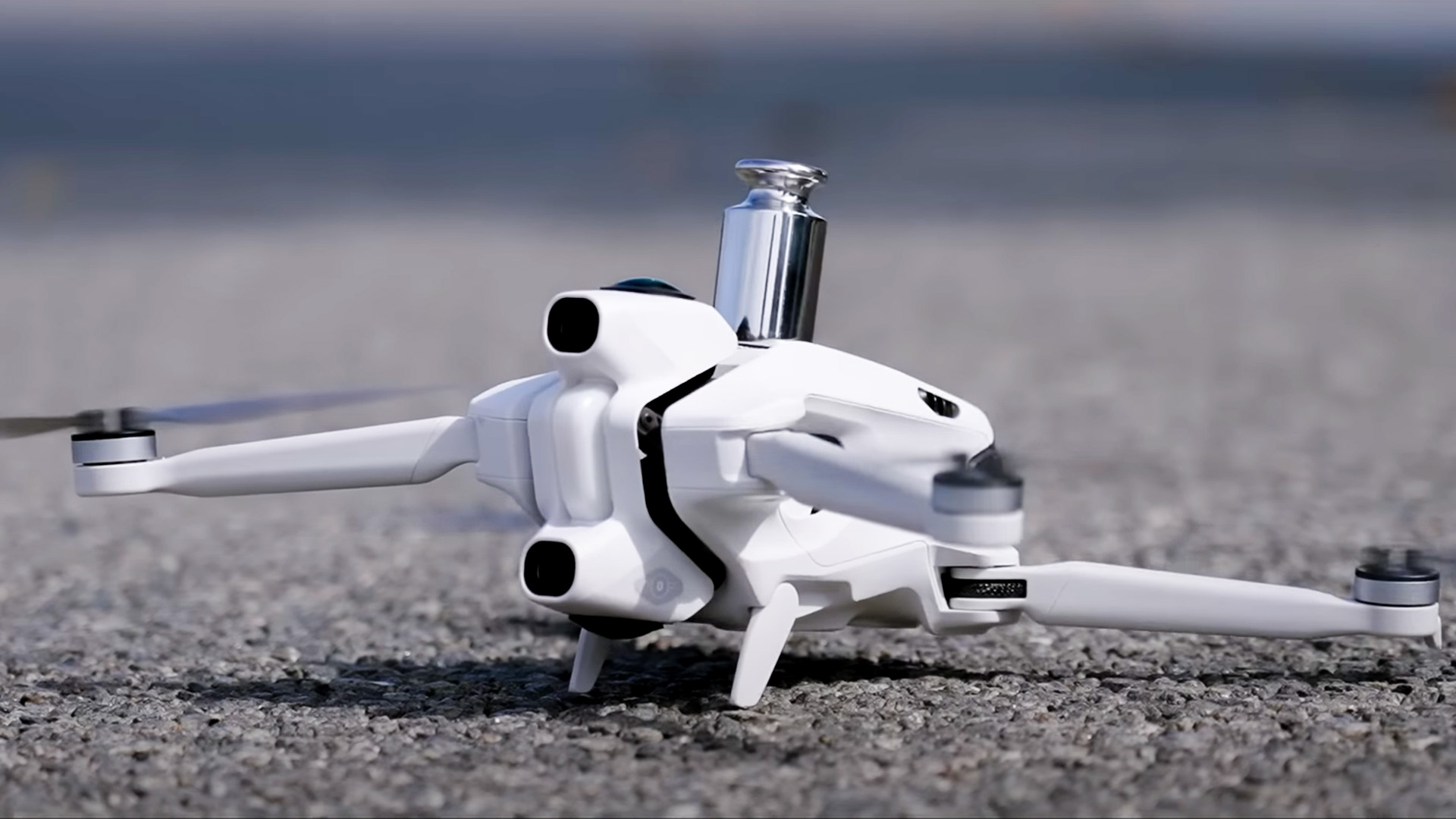
A Pragmatic End To End Workflow
From Edge Cases to Edge Wins: Challenges and What to Watch Post-Launch
Wind, Props, and the Stitch: Managing Aerodynamic Artifacts at 8K
Airflows are mischievous. Crosswinds push the aircraft into slight yaw-roll couplings that, at 8K, can expose micro-blur in high-contrast edges when shutter speeds run conservative. Prop shadows—the flicker of blades cutting sunlight—can graze the lenses at certain solar angles. The antidotes are layered: airframe design that keeps blades out of lens cones, shutter choices that land safely above flicker frequencies, and post filters that target cyclical luminance wobble without smearing texture. Stitching through foreground objects remains a test. If a mast or branch traverses the seam, dynamic seam steering plus local warping can triage, but planning shots to avoid such crossings is cleaner.
Then there’s rain and sea spray. Hydrophobic coatings help, yet droplets refract and magnify, producing comet-tail highlights that shout “lens contamination.” A micro-fiber wipe and a pocketable blower become as critical as the flight battery. In harsh light, consider a small ND kit sized for the A1’s optics; controlling exposure keeps motion rendering predictable across virtual cameras. Don’t underestimate vibration. A few grams of imbalance in a prop can telegraph to the sensors as a sinusoidal ripple; regular prop balancing is a quiet superpower. These edge cases aren’t dealbreakers—they are doors. Each constraint, once understood, becomes an axis for style.
Redundancy as Craft: Sensor Fusion, Autonomy, and Human Override
As capture ambitions rise, so does the need for resilient behavior. A mature aerial 360° rig knits GNSS, barometric altitude, visual odometry, and inertial estimates into a coherent state. If one signal drifts—a temporary GPS multipath, say—the fusion system should degrade gracefully rather than lurch. Expect the A1 to emphasize return-to-home robustness, smart obstacle sensing, and predictable fail-safes that maintain stable hover even when a sensor hiccups. For creators, redundancy isn’t just safety theater. It’s how you earn permission—internal and client—to attempt complex coverage in variable environments while staying squarely inside professional envelopes.
Human override remains essential. Autonomy is brilliant at guardrails: holding altitude bands, avoiding obvious obstacles, curbing excursions. But intent—narrative timing, micro-adjusted parallax, risk-aware improvisation—is human domain. A well-designed control stack lets you blend the two. You might fly a pre-baked path for a bridge reveal, then drop into manual to tuck a virtual camera precisely between suspension cables. If link quality dips, a clean reversion to line-of-sight hover buys you time to reposition. It’s jazz with rails: autonomy keeps tempo; you solo over it, confident that a safe cadence continues underneath your creative flourishes.
Ecosystem Bets: SDKs, APIs, and Third-Party Compatibility
Tools become platforms when they welcome others to build. For an 8K aerial 360° system, an SDK that exposes gyro data, lens maps, stabilization parameters, and remote control hooks is catalytic. Imagine third-party apps that bind virtual cameras to tracked athletes in real time, or that output live stitched spheres to immersive displays during events. Open profiles for color management and clear ingest metadata accelerate multi-tool pipelines. Beyond software, accessories matter: low-profile landing feet that stay out of nadir seams, quick-swap lens guards that don’t introduce refraction, and compact RF modules tuned for clean coexistence with on-site comms.
Compatibility with industry standards will be a post-launch bellwether. Remote identification frameworks, controller protocols, and media descriptors evolve quickly. The more the A1 speaks common dialects—controller mapping conventions, metadata schemas, LUT exchange formats—the smoother it will slide into diverse production stacks. For team shoots, multi-pilot coordination with shared awareness layers—geofenced bubbles, active lane indicators—prevents radio chaos. If Insta360 pairs the A1 with transparent roadmaps and iterative firmware updates, the platform can mature in the wild, incorporating creator feedback into features that matter: smarter reframing aids, faster proxy generation, and deeper hooks into NLEs favored by aerial storytellers.
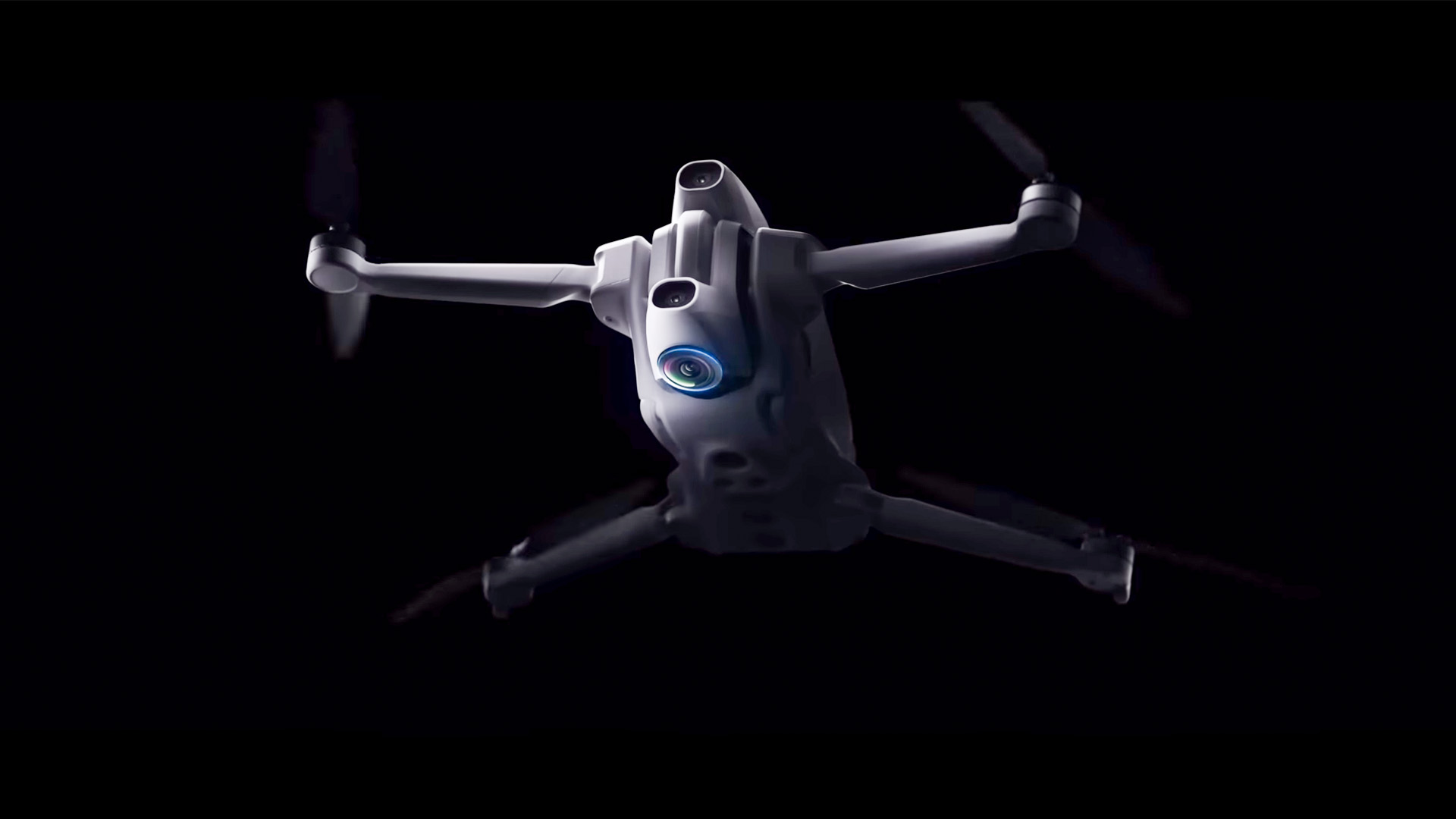
Challenges And What To Watch Post Launch
Your premier destination for new 360 releases and comprehensive coverage across the worlds of videography and photography. We bring you the latest industry news, technical insights, and creative breakthroughs.